Categories
Publications

Novel sequencing approach enables detailed characterization of PLGA co-polymers

A recent publication in Macromolecules presents a powerful new analytical approach to uncover the detailed microstructure of poly(lactide-co-glycolide) (PLGA), a key material in drug delivery systems.

In this work, Masashi Serizawa and co-workers introduce an integrated strategy combining controlled chemical degradation with reverse-phase liquid chromatography–high-resolution mass spectrometry (RPLC-HRMS). This approach enables repeat-unit–level characterization of PLGA, providing unprecedented insight into sequence distributions and block-length heterogeneity.

Figure 1. Unraveling PLGA Sequence Heterogeneity: Linking Transesterification, Microstructure, and Solubility


By leveraging complementary degradation pathways and advanced data analysis, the study reveals residual dimer-alternating motifs and detailed block-length distributions that are difficult to access using conventional ensemble techniques such as NMR alone.

Importantly, the authors demonstrate how subtle variations in polymer microstructure directly influence solubility and material performance, highlighting the critical role of sequence heterogeneity in practical applications. This work applies dedicated mass spectrometry (SWAMP-MS) data analysis, which was developed in cooperation with CAST colleagues Tijmen Bos and Bob Pirok. The work is a result of a collaboration with Corbion.

This work establishes a robust analytical framework that bridges polymer chemistry and functional properties, opening new avenues for the rational design of sequence-controlled biodegradable polymers.


Read the full article here:
https://pubs.acs.org/doi/10.1021/acs.macromol.5c03061

Categories
Publications

Microscale native SEC-HRMS to characterize immunoconjugates

Radiolabeled antibodies (radioimmunoconjugates) provide significant opportunities for targeted therapy and noninvasive disease monitoring via positron emission tomography (PET). A key factor affecting tumor uptake and imaging quality is the number of chelators attached to each antibody, known as the chelator-to-antibody ratio (CAR). Correctly determining the CAR is essential for quality control. Although radiometric titration is commonly used for this measurement, it is labor-intensive, consumes a lot of material, and takes up to half a day per sample.

In this study, CAST scientists Annika van der Zon et al., in collaboration with Bram Weijers and Danielle Vlugts (Amsterdam UMC), introduce a rapid, microscale aqueous size-exclusion chromatography–mass spectrometry (SEC-MS) method to measure CAR. She tested ammonium acetate buffer concentrations up to 1000 mM to reduce secondary interactions with the SEC stationary phase. To improve MS sensitivity and decrease adduct formation, a high in-source collision-induced dissociation (isCID) energy of 140 eV was used. The method was optimized for various immunoconjugates based on chromatographic performance and MS sensitivity, thereby enabling precise CAR calculation.

The optimized protocol, which uses 600 mM ammonium acetate (pH 6.8), was successfully applied to various immunoconjugates, yielding CAR results comparable to those obtained by traditional radiometric titration. In addition to measuring CAR, the SEC-MS method provides additional data, including dispersity index, glycosylation patterns, and antibody impurities. Most notably, the entire analysis takes only 20 minutes.

The method’s broad applicability was demonstrated across various immunoconjugates, including cysteine- and lysine-linked chelators, smaller proteins like nanobodies, and multiple chelator types (DFO, DOTA, and RESCA). This showcases its versatility as a fast, informative, and efficient analytical tool.

Are you interested in this? Check our paper or contact us to see what we can do for you!

https://www.sciencedirect.com/science/article/pii/S0003267026001649

Figure 1: Example of MS data obtained by our SEC-MS method. Trastuzumab-mal-DFO measurement with (A) m/z spectrum with the charge states and (B) deconvoluted spectrum with the different CARs (CAR0 (green), CAR1 (dark blue), CAR2 (light blue), CAR3 (red), CAR4 (pink), CAR5 (dark yellow)), CAR6 (light yellow), and glycoforms distribution ((1) G0/G0F, (2) G0F/G0F, (3) G0F/G1F, (4) G1F/G1F, and (5) G1F/G2F).

Categories
Publications

Size-Resolved Surface Charge Analysis of Polymer Nanoparticles: From Fundamental Measurement to Collaborative Innovation

Size-Resolved Surface Charge Analysis of Polymer Nanoparticles: From Fundamental Measurement to Collaborative Innovation

Polymer nanoparticles (PNPs) play an increasingly central role in contemporary materials science, with applications ranging from advanced coatings and paints to biomedical drug delivery systems. Their functional performance is governed not only by particle size, but also by surface charge density (SCD), a key parameter that determines colloidal stability, interparticle interactions, and adhesion to interfaces. Despite its importance, SCD has traditionally been assessed only as a global, averaged value, obscuring the intrinsic heterogeneity that arises during nanoparticle synthesis.

Recent analytical advances now make it possible to resolve this complexity. A notable example is the work by Kruijswijk and colleagues, who developed a capillary zone electrophoresis (CZE)-based methodology to determine particle size–resolved SCD distributions of polymer nanoparticles. Their approach provides a more nuanced understanding of nanoparticle surface chemistry and opens new opportunities for rational material design.

(A) Schematic of a nanoparticle in an electrolyte solution surrounded by an electrical double layer comprised of the inner Stern layer and the outer diffuse layer; (B) Dependency of the reduced electrophoretic mobility (Em) on the particle size for NPs with a SCD of 0.04 C∙m-2 according Ohshima’s model (C) Dependency of the reduced electrophoretic mobility (Em) on the particle SCD for NPs with a size of 100 nm according Ohshima’s model.

Moving Beyond Average Values

Conventional techniques for nanoparticle charge characterization typically report a single zeta potential value for an entire population. While useful, such measurements implicitly assume homogeneity and therefore overlook variations that may critically affect performance. In reality, polymer nanoparticles often exhibit broad distributions in both particle size and surface charge, reflecting the stochastic nature of polymerization processes and surfactant interactions.

The method introduced by Kruijswijk et al. addresses this limitation by combining CZE with theoretical electrophoretic models and chemometric deconvolution. By carefully separating the contributions of particle size distribution and intrinsic charge heterogeneity to electrophoretic peak broadening, the authors demonstrate that it is possible to extract detailed SCD distributions for industrially relevant polymer nanoparticles.

This approach was validated using polystyrene nanoparticle standards and subsequently applied to poly(methyl methacrylate–methacrylic acid) and polyurethane nanoparticles with varying monomer compositions. The results clearly showed that surface charge density is not only composition-dependent but also size-dependent, with smaller particles often exhibiting higher mean SCD values. Such insights cannot be obtained from bulk measurements alone.

Implications for Industrial and Applied Research

The ability to determine size-resolved SCD distributions has important implications across multiple application domains. In coatings and paints, for example, subtle differences in nanoparticle charge can influence dispersion stability, film formation, and substrate adhesion. In biomedical contexts, surface charge plays a critical role in cellular uptake, biodistribution, and protein adsorption.

Equally important is the observation that adsorbed ions and surfactants can significantly distort apparent surface charge. By introducing a neutral surfactant to displace adsorbed ionic species, the authors were able to distinguish intrinsic polymer charge from extrinsic effects. This highlights the necessity of carefully controlled analytical environments when translating laboratory measurements to real-world formulations.

Overall, the study illustrates how advanced separation science can provide actionable knowledge for materials engineering, enabling the optimization of nanoparticle systems based on their true physicochemical properties rather than averaged proxies.


Electropherograms with electrophoretic mobility axis of three PUR NPs of different percentage DMPA (percentage DMPA and mean NP size indicated in color) obtained with CZE analysis using a BGE of 3.75 mM sodium tetraborate (pH 9.2) in (A) absence of Brij-35 and (B) presence of 0.10 mM Brij-35. (C+D) Calculated size-resolved SCD distributions for the PUR4 NP in (C) absence of Brij-35 and (D) presence of 0.10 mM Brij-35 obtained by applying Ohshima’s model followed by deconvolution in which the contributions of PSD and sample injection to the CZE peak width are negotiated. (E+F) Global SCD distributions for the PUR4 NP in (E) absence of Brij-35 and (F) presence of 0.10 mM Brij-35 obtained from projecting the data from figures C and D onto the SCD axis, respectively.

Collaboration as a Prerequisite for Impact

Research of this nature sits at the intersection of analytical chemistry, polymer science, data analysis, and industrial application. Successfully translating such methodologies from the laboratory into industrial practice requires more than technical excellence; it demands structured collaboration between disciplines and sectors.

This is precisely where IDEAS plays a crucial role. As a collaborative company and innovation environment, IDEAS provides a platform where academic researchers, industrial partners, and analytical experts can work together on complex projects such as advanced nanoparticle characterization. By fostering shared access to expertise, instrumentation, and data-driven methodologies, IDEAS enables the co-development of analytical solutions that are both scientifically rigorous and industrially relevant.

Within such a collaborative setting, techniques like size-resolved SCD analysis can be further refined, validated across different material classes, and integrated into quality control or product development workflows. Moreover, IDEAS offers a context in which fundamental research questions, such as charge heterogeneity and surface chemistry, can be directly linked to application-driven challenges faced by industry.

Towards Data-Informed Materials Design

The work discussed here exemplifies a broader shift towards data-rich, distribution-aware characterization of functional materials. Rather than relying on single-value descriptors, researchers and engineers are increasingly equipped to consider the full complexity of nanoparticle populations.

By combining advanced analytical techniques with collaborative innovation frameworks such as those provided by IDEAS, this knowledge can be translated into smarter materials, more robust processes, and ultimately more sustainable and high-performance products. For initiatives like CAST Amsterdam, such developments underscore the value of connecting fundamental science with collaborative infrastructures that support real-world impact.

Citation

Citation

Jordy D. Kruijswijk 1, Tijmen S. Bos 1, Billy van Zanten, Ton Brooijmans, Ron A.H. Peters, Kevin Jooß, and Govert W. Somsen.(2025). Assessment of Particle Size-Resolved Surface-Charge Density Distributions of Polymer Nanoparticles by Capillary Zone Electrophoresis. Analytical Chemistry, https://doi.org/10.1021/acs.analchem.5c05189

1 = Equal contributions

Categories
Publications

How Data processing and Peak Shape Affects What We See: Understanding Detection in Two-Dimensional Chromatography

As multidimensional chromatography continues to expand its reach across complex analytical challenges, the precision of data interpretation increasingly depends on what happens after separation. In comprehensive two-dimensional chromatography (2D-LC and 2D-GC), even subtle differences in how peaks appear, how wide they are, how they tail, or how they overlap, can determine whether an analyte is detected accurately or missed entirely.

A new study by Nino Milani, Nard Schellekens, Alan Garcia Cicourel, Rob Edam, Gabriel Vivo Truyols, Bob Pirok, and Tijmen Bos, published in Analytica Chimica Acta (2025), takes on this fundamental question: how do peak characteristics affect the performance of peak detection algorithms in 2D chromatography?


Simulating 700,000 Chromatograms to Understand Detection

Peak detection lies at the heart of chromatographic data processing. It converts raw signals into measurable information, retention times, areas, and ultimately, quantitative results. In 2D chromatography, where each measurement spans two retention-time axes with vastly different information densities, this process becomes far more complex.

Milani and colleagues developed a data simulator capable of generating highly realistic chromatograms derived from experimental probability distributions. By systematically varying peak properties, such as width, asymmetry, shape, relative intensity, and modulation shifts, they created an extensive virtual dataset encompassing over a terabyte of data.

Two distinct detection algorithms were then evaluated:

  • The two-step algorithm, which detects peaks in the second-dimension traces and subsequently groups them across modulations.
  • The watershed algorithm, which treats the chromatogram as a 2D landscape, detecting peaks through image segmentation.

Revealing the Subtle Effects of Peak Properties

Through this systematic approach, the researchers could visualize the recovery of true peak areas across thousands of configurations. The results were expressed as heatmaps, each pixel representing how accurately a simulated peak was detected under a given scenario.

Several trends emerged:

  • Peak width strongly affected both algorithms. As peaks became broader, recovery decreased, especially for the two-step approach, due to modulation “exclusion,” where low-height modulations fell below detection thresholds.
  • Modulation shifts, common in comprehensive GC×GC and shifting-gradient LC×LC, proved particularly disruptive. Both algorithms struggled when retention times drifted between modulations, with the watershed method especially prone to splitting peaks.
  • Asymmetry and shape (tailing or fronting) affected both methods modestly, although the watershed algorithm’s topographical nature made it more sensitive to skewed peaks.
  • Peak ratios (relative intensities) influenced results through thresholding effects, small peaks beside large ones were often underestimated or missed entirely.

No Perfect Algorithm—But Better Understanding

Perhaps the most insightful conclusion was that there is no universally best peak detection strategy. Instead, the choice depends on the chromatographic context:

  • The watershed algorithm is advantageous for broader, more symmetrical peaks, typical of polymer or group-type analyses.
  • The two-step algorithm performs better for sharper, complex chromatograms where peaks are closely spaced and moderately deformed, such as in natural product or petroleum analyses.

The study also underscores how pre-processing choices, such as interpolation or threshold settings, can profoundly shape results, sometimes more than the algorithm itself.

Towards More Reliable Data Interpretation

By disentangling the relationships between signal characteristics and detection performance, this work provides a quantitative foundation for algorithm selection and design. The methodology, openly shared through the GitHub repository CAST-Amsterdam/PeakDetectionBenchmark, offers a new benchmark for evaluating detection strategies objectively and reproducibly.

Ultimately, Milani et al. remind us that in advanced chromatography, understanding the data is as critical as generating it. As automation and machine learning increasingly drive method development, robust and transparent detection remains the cornerstone of analytical reliability.

Citation

Milani, N.B.L., Schellekens, N.C.A., Garcia Cicourel, A.R., Edam, R., Vivo Truyols, G., Pirok, B.W.J., & Bos, T.S. (2025). Evaluation of the relationship between peak characteristics and detection performance in two-dimensional chromatographic data. Analytica Chimica Acta, 1377, 344634. https://doi.org/10.1016/j.aca.2025.344634

Categories
Publications

Understanding Radial Dispersion in Two-Dimensional Liquid Chromatography

As analytical chemistry continues to push the limits of resolution and complexity, even subtle physical effects can determine the quality of results. A recent study by Rick van den Hurk, Tijmen Bos, Dwight Stoll, and Bob Pirok, published in the Journal of Chromatography A (2025), examines one such effect: radial dispersion, the way liquids mix across the width of a flow channel.

Their findings reveal that inadequate mixing of solvent streams, often overlooked in two-dimensional liquid chromatography (2D-LC), can cause distorted peaks and unpredictable separations. The solution, however, turns out to be elegantly simple: coiling the connecting tubing.

The Subtle Challenge of Mixing in Chromatography

In 2D-LC, effluent from a first separation is transferred to a second column using a modulation interface. This often requires combining two solvent streams, typically an organic-rich and an aqueous flow, using a T-shaped connector. Under the low-flow, laminar conditions typical of LC, the two liquids can flow side by side without mixing, forming radially segregated layers.

The team visualized this phenomenon using coloured dyes and confirmed it through computational fluid dynamics (CFD) simulations. Both approaches revealed the persistence of segregated streams after the junction.


These unmixed layers reach the column inlet, causing uneven solvent composition across the capillary radius. The result is poor analyte retentionpeak splitting, and fronting, all of which compromise data quality and quantitative accuracy.


To address this, they tested whether changing the geometry of the connecting tubing could promote mixing. When the tubing was coiled, the curvature generated Dean vortices, small secondary flows that enhance radial dispersion without turbulence. The effect was clear: analyte peaks became narrower, more symmetrical, and more reproducible.

Even a modest number of coils significantly improved chromatographic performance. Beyond roughly 20 coils, additional curvature offered diminishing returns, suggesting an optimal balance between mixing efficiency and minimal dead volume.

Practical Implications

This work highlights how physical design can be as crucial as chemical optimization in modern chromatography. Coiled tubing offers a low-cost, low-complexity way to improve solvent homogeneity at modulation interfaces, outperforming conventional mixers that primarily promote axial, not radial, dispersion.

The findings are relevant not only for active modulation strategies such as Active Solvent Modulation (ASM) or At-Column Dilution (ACD), but also for feed injection, post-column derivatization, and make-up flow configurations. In all cases, inducing radial dispersion enhances stability, reproducibility, and analytical precision.


van den Hurk, R.S., Bos, T.S., Stoll, D.R., & Pirok, B.W.J. (2025). Significance of radial dispersion to effective modulation in two-dimensional liquid chromatography. Journal of Chromatography A, 1763, 466456. https://doi.org/10.1016/j.chroma.2025.466456

Categories
Publications

HILIC-MS impurity profiling of therapeutic PS- oligonucleotides

Ion-Pairing Hydrophilic Interaction Chromatography for Impurity Profiling of Therapeutic Phosphorothioated Oligonucleotides

Oligonucleotides are short strands of synthetic DNA or RNA that are synthesized via a solid-phase synthesis, in which numerous of closely-related impurities are generated. Ion-pairing reversed-phase liquid chromatography (IP-RPLC), anion exchange chromatography (AEX), and hydrophilic interaction chromatography (HILIC) are often used to profile these impurities, which allows for good separation of impurities comprising different number of nucleotides as the full-length product (FLP). However, impurities comprising the same number of nucleotides as the FLP are often not separated. Therefore, ion-paring HILIC (IP-HILIC) was explored as an alternative separation mode to overcome these challenges.

Key points:

  • Changed selectivity: by adding ion-pairing reagents (IPRs) to the HILIC eluent, the relative contribution of the highly polar phosphate moieties on HILIC retention is reduced and, thereby, increasing the relative contribution of the nucleobase composition and conjugated groups.
  • Suppressed diastereomer separation: Phosphorothioation of the phosphate groups results in the formation of diastereomers, with 2n possible diastereomers (n = phosphorothioate groups). IPRs in the HILIC eluent reduced diastereomer separation, leading to sharper peaks.
  • Separation of same-length impurities: IP-HILIC shows increased separation of impurities comprising of the same number of nucleotides as the FLP, such as deaminated products that differ less than 1 Da from the FLP. This is noteworthy as no other MS-compatible, one-dimensional LC separation can achieve this.

Figure 1: IP-HILIC-MS total and extracted ion chromatograms of GalNAc-conjugated oligonucleotides (top) and non-conjugated oligonucleotides (bottom) and the mass spectra of peaks A-D (A & C: FLPs, B & D: deaminated products)

The developed IP-HILIC method shows great potential as a screening method for quality control. The work is published in Analytical Chemistry and can be found with the following link: https://pubs.acs.org/doi/full/10.1021/acs.analchem.5c01407


Categories
Publications

Block-Length Distributions Using Fragmentation Data Obtained from Tandem Mass Spectrometry

Researchers Rick van den Hurk, Dr. Tijmen Bos, and Dr. Bob Pirok have, together with scientists Dr. Ynze Mengerink (Brightlands Chemelot Campus) and Prof. Dr. Ron Peters (Covestro, HIMS), developed a new algorithm that can analyze copolymers and determine their block structure, something that was previously out of reach with existing techniques.

Polymers are all around us, from the coatings on your phone and the materials in your running shoes to life-saving drug-delivery systems and medical implants. Many of these advanced materials are copolymers, which are made by combining different types of chemical building blocks.

Interestingly, even when two copolymers have the same overall composition, the way these building blocks are arranged can lead to drastically different properties. For example, one polymer might be rigid while another is flexible, or one transparent while another is opaque. Within a single batch, this arrangement can vary from molecule to molecule. This variability can be described using a concept called the block-length distribution (BLD), which captures how frequently different block arrangements occur. This distribution plays a key role in determining a material’s performance characteristics, including its flexibility, strength, and biodegradability.

Until now, accurately measuring these distributions at the molecular level has been a major challenge. Traditional techniques like nuclear magnetic resonance could only offer averaged information. The team’s newly developed algorithm changes that by combining tandem mass spectrometry (MS/MS) data with a smart computational approach that takes fragmentation behavior into account. The algorithm allows researchers to reconstruct how blocks are distributed within a copolymer sample, giving a much more detailed picture of the material’s internal structure.

This method has already been successfully applied to study polyamides and polyurethanes, important industrial polymers found in everything from textiles to insulation foams. Notably, the findings showed that even polymers with the same chemical makeup can have very different block distributions, depending on how they were synthesized. These subtle differences can explain variations in material performance that would otherwise remain hidden.


The ability to determine BLDs with such precision not only improves our understanding of polymer chemistry but also opens the door to the rational design of next-generation materials. By fine-tuning the block arrangement, scientists and engineers can tailor materials more precisely to specific applications. It could also support the development of more sustainable materials, as better control over structure may lead to improved recyclability or allow for the use of bio-based feedstocks.

This work is part of the PARADISE project, a collaboration between academic institutions (VU Amsterdam and the University of Amsterdam) and industrial partners including Covestro, DSM, Shell, and Genentech, aimed at driving forward innovation in polymer research.

Relevant article: https://doi.org/10.1021/acs.macromol.5c00297,

Categories
Publications

New Frontiers in  Intact Protein Characterization by LC-MS at CAST

CAST scientists Annika van der Zon and Ziran Zhai have just published two manuscripts
showcasing significant advances in the low flow analysis of intact antibodies and protein complexes, offering improved sensitivity and performance. The CAST team will utilize these novel nano SEC-MS and HILIC-MS methods in future bioanalysis projects.

Analyzing Minute Amounts of Protein Complexes with Nanoflow Size Exclusion Chromatography–Native Mass Spectrometry

Characterizing intact proteoforms and protein complexes often faces challenges in maintaining native structures and high sample requirements. CAST scientist Ziran Zhai developed a novel nanoflow size exclusion chromatography–native mass spectrometry (nanoSEC-nMS) method to overcome these limitations.

Key Advancements:

  • Optimized Capillary SEC Columns & Reduced Peak Broadening: The method includes techniques for preparing high-performance capillary SEC columns and optimizing injection to reduce peak widths.
  • Direct Coupling under Challenging Conditions: It enables direct coupling of nanoflow SEC with native MS even in salt-rich environments.
  • Milder Desolvation for Native Structures: Nanoflow allows for milder ESI desolvation, preserving the native structures of proteins and complexes.
  • High Sensitivity and Throughput: The method requires limited sample (approx. 100 nL per injection) and significantly enhances native MS throughput, enabling online desalting and oligomer separations within 25 minutes.

Figure 1: Analysis of urine samples and Ovitrelle with the nanoSEC-nMS: (a) EIC of the urine hCG samples; (b) MS spectrum of hCG proteins; (c) deconvoluted results of hCG proteins; (d) EIC of the Ovitrelle sample; (e) MS spectrum of Ovitrelle; (f) deconvoluted results of Ovitrelle.

This nanoSEC-nMS method enables the analysis of proteins and complexes across a broad molecular weight range (10 to 250 kDa) in their native states, preserving noncovalently bound metal ions. This study was published in Analytical Chemistry and can be accessed freely at the link below:

https://pubs.acs.org/doi/10.1021/acs.analchem.5c01019 

Precise Glycoform Profiling of Intact Antibodies with HILIC-MS

Traditional methods struggle with comprehensive intact antibody glycoform profiling. To address this,CAST scientist Annika van der Zon et al. at developed a novel hydrophilic interaction chromatography (HILIC) method based on lab made acrylamide-based monolithic columns directly coupled to mass spectrometry.

Key Innovations:

  • Optimized Monolithic Stationary Phase: The porogen composition was optimized, enhancing separation efficiency
  • Enhanced Glycoform Resolution: The method achieved baseline separations for single and double Fc glycosylation, and partial separations for glycoforms differing by a single glycan unit.
  • Sensitive Detection of Minor Glycoforms: It enabled sensitive measurement of low-abundance glycoforms in the nanogram injection range.

Figure 2. Analysis of intact trastuzumAb at the intact level. Base Peak Chromatogram of the analysis and Extracted Ion Currents of selected glycoforms are shown.  

This HILIC-MS method significantly enhances glycoform selectivity for intact antibodies, providing a more comprehensive characterization essential for bioanalytical applications. This work was published in the Journal of Analytical Chemistry and can be accessed freely at the link below:

https://doi.org/10.1021/acs.analchem.5c02033

Categories
Publications

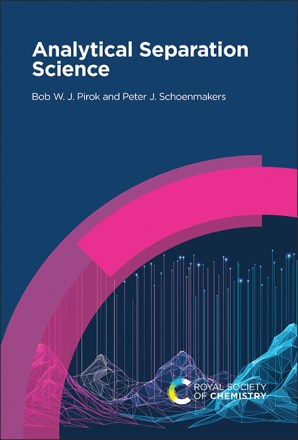
Educational textbook Analytical Separation Science launched by Pirok and Schoenmakers

At the renowned HPLC2025 conference, a milestone in the field of separation science was celebrated with the official launch of Analytical Separation Science, a comprehensive new textbook authored by Dr. Bob Pirok and Prof. Peter Schoenmakers. The launch event, held on June 16 at the Historium Bruges and organized by the Royal Society of Chemistry (RSC), brought together leading scientists and educators in the field.

The first official copy was presented to Prof. Govert Somsen of the Vrije Universiteit Amsterdam, a long-time colleague and co-educator in analytical chemistry.

Structured around Basic, Master, and Advanced modules, the book serves both as a teaching tool and as a professional reference. It introduces fundamental concepts, offers in-depth treatments for graduate-level study, and explores cutting-edge developments in chromatographic and electrophoretic techniques.

This book reflects our shared commitment to educating the next generation of analytical scientists,” said Prof. Peter Schoenmakers. “By combining foundational theory with real-world case studies and emerging methods, we aim to make separation science engaging and relevant across career stages.

Figure 1. Cover of the book.

An interactive companion website (https://ass-ets.org) extends the book’s reach. It offers additional resources including a literature repository, academic lectures with interactive figures, and exercises based on decades of teaching experience at the University of Amsterdam and Vrije Universiteit Amsterdam.

The website is a community based effort with universities to be supporting their expertise to complete the analytical portfolio as much as possible.

Figure 2. Prof. Wolfgang Lindner (University of Vienna) and Prof. Peter Schoenmakers (University of Amsterdam) draw the winners of the book competition.

Our goal was to make learning separation science both accessible and inspiring,” added Dr. Bob Pirok. “This project combines our classroom experience with insights from industry collaborations, bridging education and practice.”

Figure 3. Photograph from the launch event.

Conference participants were able to win a copy of the book by solving a series of puzzles and Prof. Wolfgang Lindner (University of Vienna) and Prof. Schoenmakers (University of Amsterdam) drew the five winners from the entries.

The book is now available at the Royal Society of Chemistry or any other book vendor.

Categories
Publications

Introducing an algorithm to accurately determine copolymer block-length distributions

Copolymers are the foundation of many high-performance materials used in advanced applications such as medical devices, implants, electronics, and self-healing coatings for aerospace and space exploration. Their material properties—such as flexibility, toughness, or responsiveness—can be finely tuned by adjusting polymer characteristics like molecular weight, chemical composition, and block-length distribution (BLD).

While molecular weight and composition are routinely analyzed, the BLD—describing how monomer blocks are arranged along the polymer chain—remains difficult to measure, particularly for copolymers composed of more than one type of monomer. Understanding and controlling BLD is crucial because it plays a pivotal role in determining mechanical, thermal, and phase-separation behavior. However, current methods, such as NMR or pyrolysis-GC-MS, have limitations in accurately and comprehensively characterizing BLDs.


Our Solution
In this study, we introduce a computational approach that enables the quantitative determination of block-length distributions from copolymer fragmentation data. We developed and validated an algorithm using both simulated copolymer sequences and analytical solutions to generate ground-truth fragment data. This allowed for an objective evaluation of algorithm performance—something not previously achievable.

The algorithm incorporates a trust-region-reflective optimization strategy and was tested under various conditions, including data noise and fragment size limitations. When fragment data containing chains of up to four monomers (tetramers) were included, the algorithm consistently reconstructed BLDs with high accuracy, achieving similarity coefficients (SC) above 0.99 compared to the known distributions.

https://doi.org/10.1016/j.aca.2025.343990


Key Innovations

  • High Accuracy: Outperforms existing algorithms in BLD reconstruction from mass spectrometry-based data.

  • Versatile: Capable of handling complex distribution shapes, including non-unimodal and asymmetric distributions.

  • Robust to Noise: Maintains accuracy even when fragment data includes measurement noise.

  • Objective Evaluation: Enables benchmarking of BLD algorithms using simulated data with known parameters.


Practical Relevance
The algorithm was also applied to experimental polymer systems such as polyamides and polyurethanes, demonstrating its applicability to real-world materials. This makes it a powerful tool for synthetic chemists seeking to design materials with tailored properties by manipulating block structures.


Future Directions
Translating this approach from simulation to experimental data introduces new challenges. Mass spectrometry data may be affected by ionization efficiencies and fragmentation biases, while NMR may suffer from overlapping signals in complex systems. To address this, future research will focus on:

  • Incorporating fragmentation preferences based on bond type or analytical method.

  • Developing preprocessing pipelines tailored to specific instrumentation.

  • Extending the algorithm to support more than two monomer types, while managing the increased computational complexity.


Conclusion
This work represents a significant advancement in the field of polymer analytics. For the first time, researchers can objectively and accurately reconstruct the block-length distribution of complex copolymers from fragment data. By making this tool available, we aim to empower chemists and materials scientists in designing next-generation materials with precisely engineered microstructures.